


Locally Grown: Local Farms
4.9223.00 Reviews
App Specs
- Version
- 1.1.1
- Updated On
- License
- Free
- Downloads
- 10,000+
- Developer
- JohnAnge Kernodle
- Categories
- Food & Drink
- Platform
- Android
Screenshots
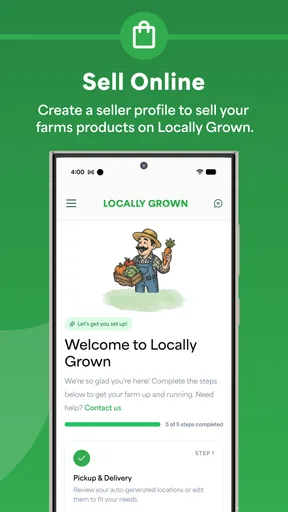
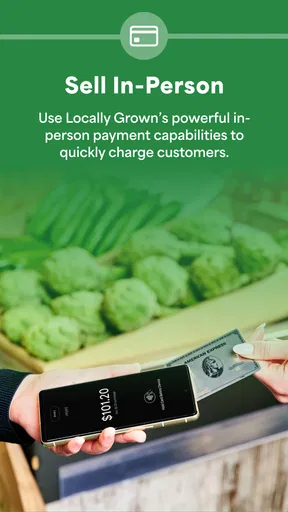
 Analysis by AppCompare
I like the idea of finding nearby farms without having to piece together information from scattered searches, and Locally Grown: Local Farms is built around that straightforward errand: finding food from local producers and arranging pickup or delivery. It’s a Food & Drink app from JohnAnge Kernodle, and its appeal is easiest to understand if you already want to shop closer to home rather than simply browse another grocery catalog.
What to expect when you open it
The app’s purpose is practical, but it doesn’t replace every part of grocery shopping. I’d treat it as a way to discover local options and check what farms make available, then plan around their pickup or delivery arrangements. That distinction matters: a farm marketplace depends on what participating sellers offer, so it may complement a regular supermarket shop rather than cover every item on your list.
For a first visit, I’d start with a specific need instead of browsing aimlessly. Looking for eggs, tomatoes, or another seasonal ingredient gives you a useful way to assess whether nearby listings fit your household. If you have a particular farm in mind, checking its profile can also help you decide whether its products and practices suit you before placing an order.
Speed, searching, and everyday planning
Locally Grown is designed around finding farms, viewing products, and choosing a way to receive an order. That makes it a different kind of food app from one focused on restaurant delivery or a large supermarket’s full online inventory. I’d expect the main benefit to be discovery and local choice, not a promise that every product is available instantly or that every order follows the same schedule.
A useful habit is to check options before you need an ingredient that day. Local supply can be more dependent on what a farm has ready, and pickup or delivery needs coordination. If you’re planning dinner, browsing early gives you time to choose an available alternative instead of assuming a particular item will be there at the last minute.
Busy shopping moments and practical trade-offs
The app is most useful when I’m planning a deliberate shop: building a short list, comparing a few farms, and deciding whether pickup or delivery makes sense. It may be less convenient for a rushed, all-in-one grocery run if you need a broad range of household staples in one basket. A regular supermarket app is often better for predictable, consolidated shopping; this one is more compelling when local produce itself is the priority.
For households with different schedules, it’s worth thinking through the handoff before ordering. Pickup can be a good fit if a farm is already on your route, while delivery can save a trip when that option is offered. I would check the details for the specific farm and order rather than assume every seller handles fulfillment in the same way.
Worth Reading Before You Choose

Flipboard Shows What News Apps Must Do Beyond the Feed

Switching to Android Auto Means Rethinking Your Driving Routine

Google Calendar Makes a Crowded Week Easier to Manage

Ludo King Makes the Most of the Minutes Between Plans

Baby Panda World Brings Quick Play to Modern Phones, but Its Game Library Feels Busy

ESPN’s Live Game View Makes Following Close Games Easier
Reliability and knowing what to check
A smooth app experience is only one part of a successful food order. The farm’s product availability and the chosen fulfillment arrangement matter just as much. I’d read the farm information carefully, confirm the items in my order, and make sure I understand where and how pickup or delivery is supposed to happen. Those small checks are especially helpful when trying a farm for the first time.
Locally Grown has a 4.9 average from around 550 ratings, with roughly 85 written reviews. That’s encouraging social feedback, though I’d still use the farm’s own listing and the details of a particular order to make my decision. Reviews can help set expectations, but seasonal products and individual fulfillment plans can vary.
Device fit and who should try it
The app is free, rated Everyone, and its current version is 1.0.6; it runs on devices with Android 7.0 or later. It has passed 10,000 installs, so it has reached a growing group of people interested in local food. If your device meets the minimum requirement, the bigger question is whether there are farms and products near you that make the app useful.
I’d recommend it to people who enjoy seasonal cooking, want to discover nearby producers, or are willing to plan around local availability. It may not be the right main shopping tool for someone who needs a huge catalog, highly standardized stock, or a single delivery covering every household essential. In that case, a grocery service can be the more convenient default, with this app reserved for farm goods.
Before relying on it for a regular routine, I’d check whether the farms shown are within a practical distance, whether their available products match what you actually eat, and whether their pickup or delivery options fit your schedule. That quick check can prevent the common disappointment of finding an appealing local listing that is inconvenient to reach or doesn’t suit the week’s needs.
Discovering Freshness at Your Fingertips
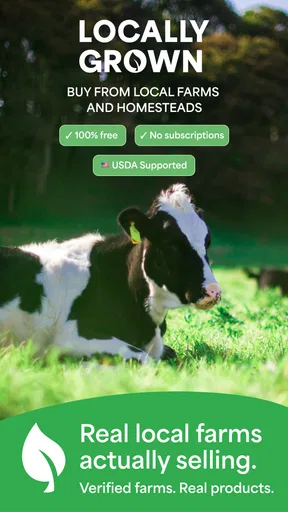
So, what’s the deal with Locally Grown: Local Farms? At its core, the app connects users with local farms in their area. It’s like having a farmer’s market in your pocket. The app is all about promoting sustainability and supporting local producers, which is something I can totally get behind.
When you first open the app, you’re greeted with a user-friendly interface that’s just as inviting as a warm summer day. The navigation is smooth, making it easy to search for farms by location or product. Whether you’re on the hunt for organic veggies or farm-fresh eggs, this app has got you covered.
Features That Stand Out
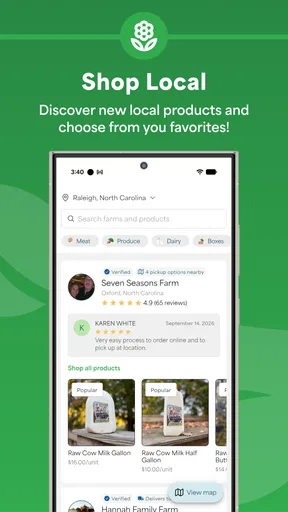
One of my favorite features is the farm profiles. Each farm has a dedicated page where you can learn about their practices, view available products, and even see pictures of the farm. It’s like getting a personal tour without leaving your house.
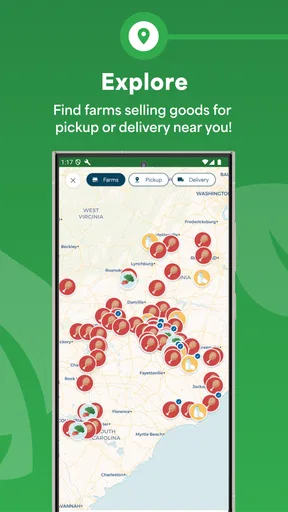
The app also includes a handy map feature, which shows you all the local farms in your area. It’s perfect for planning a weekend road trip to stock up on fresh goodies. Plus, you can filter the map by the type of produce you’re interested in, which is a nifty touch.
Another great addition is the seasonal calendar. Knowing what’s in season helps you make informed choices and ensures you’re getting the freshest produce possible. It’s a small feature that makes a big difference, especially for anyone trying to eat more seasonally.
Why Go Local?
Choosing to shop locally has a plethora of benefits. Not only are you supporting small businesses, but you’re also reducing your carbon footprint. The food doesn’t have to travel far, which means it’s fresher and more environmentally friendly.
With the app, you’re not just buying produce; you’re joining a community. The app encourages users to leave reviews and share their experiences, creating a vibrant network of farm enthusiasts. It’s like being part of a club where everyone loves fresh produce as much as you do.
Personal Experience
Using the app has been a delightful experience. I found a charming little farm just a few miles from my home that I never knew existed. They specialize in heirloom tomatoes, and let me tell you, they were the juiciest tomatoes I’ve ever tasted.
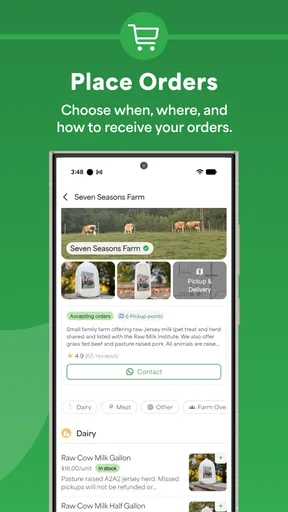
Ordering was a breeze, and I even had the option for farm pickup or delivery. The app sends notifications when your order is ready, which is a nice touch for those of us who tend to forget.
Planning around a local-food shop
A realistic way to use this is to make the farm order the centerpiece of one meal, rather than expecting it to replace a full weekly shop. I might check the seasonal calendar, choose an ingredient that looks appealing, then build a simple dinner around it and pick up the remaining basics elsewhere. That keeps the local purchase enjoyable without making the menu depend on a long list of specific items.
The map and product filters can also help narrow a weekend outing. I’d use them to identify a farm that fits both the food I want and the direction I’m already traveling, then check its profile before setting out. The trade-off is that a scenic farm visit takes more planning than adding groceries to a routine delivery; the benefit is knowing where the food comes from and potentially discovering a producer I’ll return to.
Making the most of farm profiles and seasons
Farm profiles are worth reading beyond the product photos. I’d use the information about a farm’s practices as context for choosing where to shop, then use its available products to decide what is realistic for the current visit. This is more useful than searching only for a familiar ingredient: local listings may introduce varieties or seasonal choices that don’t appear in a standard supermarket aisle.
The seasonal calendar is best treated as a planning aid, not a guarantee that every listed crop will be available from every farm. A practical approach is to keep one flexible meal in mind—soup, a salad, or a vegetable side that can accommodate substitutions—so a change in what’s available doesn’t derail the plan. That little bit of flexibility makes local shopping feel less like a constraint and more like a reason to try something different.
Where the experience can feel less predictable
Local food shopping has a different rhythm from buying packaged goods from a large chain. A farm may have a narrower selection, and what is offered can make seasonal timing more important than it is for standard grocery staples. I wouldn’t open the app expecting every ingredient on a recipe list to be available nearby; I’d use it to find the best local fit and keep a backup source for anything essential.
Pickup and delivery are useful choices, but they do not make the experience identical to instant grocery delivery. The order still needs to fit the farm’s arrangements and your schedule. If you’re coordinating food for a busy week, check those details before counting on an order for a particular meal. That is a small extra step, but it is the difference between a pleasant farm purchase and a last-minute scramble.
Responsiveness and recovery when plans change
For an app centered on browsing and ordering, perceived speed matters most when moving between farm listings, checking products, and confirming the plan. My impression of the experience is that the navigation feels smooth, but I would not judge reliability solely by how quickly a screen opens. A current product listing and clear fulfillment details are more valuable than a fast interface if I’m deciding whether to make a trip.
If a plan changes after choosing a farm, I’d revisit the listing and order details rather than assume the original pickup or delivery arrangement can be adjusted automatically. That cautious workflow is sensible with any direct local purchase. The app’s role is to make finding farms easier; the practical relationship remains tied to each producer and the way that producer handles an order.
Who gets the most from it
This is a strong match for curious cooks, people who want to support nearby producers, and shoppers who enjoy adapting meals to seasonal ingredients. It can also suit someone who has a favorite local farm but wants a more convenient way to see its products and arrange a purchase. The strongest payoff comes when discovery itself is part of the shopping experience, rather than an obstacle to finishing a fixed list.
I’d be more hesitant to recommend it as a primary option to someone with little flexibility, limited time for pickup, or a need to compare a large, standardized range of products. A conventional supermarket app is generally simpler for repeat staples and one-stop ordering. Locally Grown makes more sense as a complement: use it for the produce, eggs, or farm goods that matter to you, and use another retailer for the rest if that better fits your routine.
Final Thoughts
Overall, Locally Grown: Local Farms is a fantastic app for anyone looking to make a positive impact on their community and the environment. It’s easy to use, informative, and connects you with the freshest produce around.
If you’re even slightly interested in where your food comes from, give this app a download. It’s more than just an app; it’s a lifestyle choice that supports local farmers and brings the community together. Plus, who doesn’t love fresh, delicious food?
Ready to start your local food journey? Check out the app and see what local treasures you can discover. Happy farming!
My performance verdict
For me, the app’s strongest performance quality is that it brings discovery, product browsing, and ordering into one focused place without asking me to treat local food like ordinary supermarket stock. The smooth navigation described in my experience makes exploring feel approachable, while the real-world pace still depends on what a farm offers and how pickup or delivery is arranged. I’d call it a useful, lightweight idea for planned shopping rather than a tool for urgent, comprehensive grocery runs.
There’s no reason to install it just because local food sounds appealing in theory. First consider whether nearby farms are convenient and whether you’re happy to shop with some seasonal flexibility. If both answers are yes, the app can make discovering a new producer feel simple. If you need guaranteed breadth and a tightly scheduled, repeatable basket, a standard grocery service is likely the better fit.
Pros
- Supports local agriculture and farmers.
- User-friendly interface and navigation.
- Comprehensive farm information available.
- Customizable notifications for fresh produce.
- Offline access to farm locations and details.
Cons
- Limited to specific geographic areas.
- Occasional inaccuracies in farm details.
- Requires regular updates for new listings.
- No direct purchase option within app.
- Some features require premium access.
FAQs for Locally Grown: Local Farms
What is Locally Grown: Local Farms?
Locally Grown: Local Farms is an app designed to connect users with local farms and fresh produce in their area. It provides a platform where users can browse and purchase produce directly from nearby farms, ensuring fresh, locally-sourced ingredients while supporting local agriculture.
How does Locally Grown ensure the quality of produce?
The app partners with trusted local farmers who adhere to high standards of quality and sustainability. Users can read reviews and ratings from other customers, ensuring transparency and trust in the produce they purchase. Additionally, farms are regularly reviewed to maintain high-quality offerings.
Is Locally Grown available in my area?
Locally Grown is continuously expanding its network of farms. After downloading the app, users can enter their location to see available farms and products nearby. If it’s not available in your area yet, you can sign up for notifications to be alerted when it becomes available.
What payment options are accepted on Locally Grown?
The app supports various payment methods, including credit/debit cards and popular digital wallets like PayPal and Apple Pay. All transactions are processed securely through the app, ensuring a seamless and safe purchasing experience for users.
Can I schedule deliveries or pickups through the app?
Yes, Locally Grown offers flexible delivery and pickup options. Users can choose convenient times for home delivery or pick up their orders directly from the farm. These options depend on the farm’s capabilities and user preferences, providing a tailored experience for each customer.


